Section 03
Radiation and safety
Justification, optimisation, published dose figures and the UK regulations that decide who may request and who may carry out an exposure.
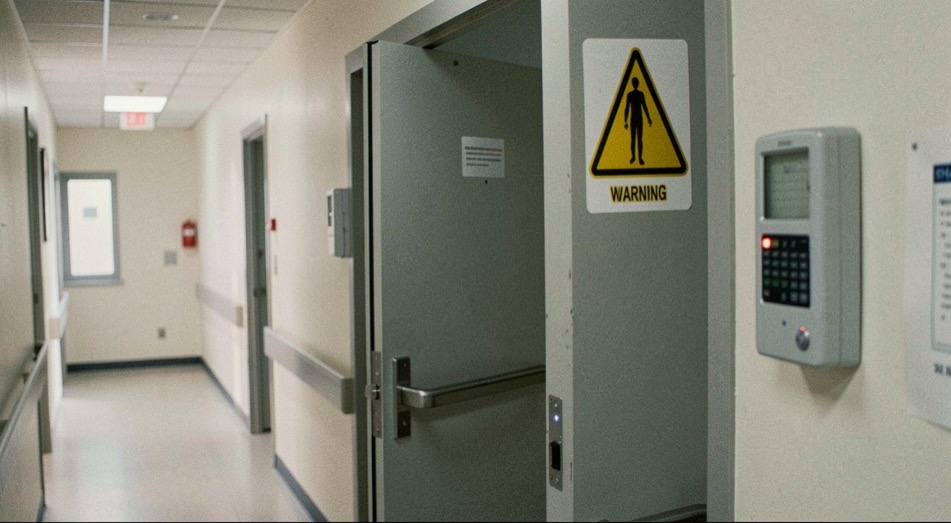
Radiation is part of the everyday reality of medical imaging in the United Kingdom, from a single chest film to a complex CT protocol. The framework that governs the medical use of ionising radiation rests on a small set of principles set out by the International Commission on Radiological Protection, and that have been given direct legal force in British law.
Three principles from the ICRP
The International Commission on Radiological Protection describes itself as an independent, international organisation that advances for the public benefit the science of radiological protection by providing recommendations and guidance on all aspects of protection against ionising radiation. Its Publication 103, published in 2007, sets out three principles: justification, optimisation, and the application of dose limits. These three ideas structure everything that follows in this section, and they map directly onto the UK regulations that make them enforceable.
The British, enforceable version
In the United Kingdom, the Ionising Radiation (Medical Exposure) Regulations 2017, known as IR(ME)R 2017, translate the ICRP principles into law. Justification appears at regulation 11, which requires that every medical exposure has been justified by the practitioner as showing a sufficient net benefit. The regulation sets out what that weighing involves: the specific objectives of the exposure and the characteristics of the individual involved, the total potential diagnostic or therapeutic benefits, the individual detriment the exposure may cause, and the efficacy, benefits and risk of available alternative techniques.
Optimisation appears at regulation 12, which requires that doses are kept as low as reasonably practicable consistent with the intended purpose. That phrase, often shortened to ALARP, is the second of the three principles, and regulation 12(1) states it as keeping doses "as low as reasonably practicable consistent with the intended purpose". Regulation 12(8) also singles out three situations demanding particular attention: medical exposures of children, health screening programmes, and individuals in whom pregnancy cannot be excluded.
A parallel duty applies outside the patient pathway. Under regulation 9 of the Ionising Radiations Regulations 2017, the employer must take all necessary steps to restrict so far as is reasonably practicable the exposure of employees and the public, by means of engineering controls, design features and the provision and use of safety features and warning devices. The full legal framework is examined on the page devoted to IR(ME)R 2017.
Reading doses alongside their source
One habit shapes every figure quoted on this website: a dose is always read next to its source and its date. A number without provenance tells a reader very little. As a single anchor point here, the UK Health Security Agency comparison table published on 18 March 2011 gives the UK average annual radiation dose as 2.7 millisieverts. All the other published values, their units and their contexts are collected on the page covering radiation doses, and the way this publication handles sourcing generally is set out under sources and method.
These three pages together form the safety section: the legal framework, the published dose figures, and the sourcing rules that let a reader judge both.
The other doors of the publication: Scans explained, Having a scan and People and history. Every one of them points back to modalities at a glance.
In this section
7 pages, newest first.
-
Radiation doses
Dose figures are only meaningful next to the source they were published in and the year that source was written. Every number on this page carries both.
6 September 2026
-
IR(ME)R 2017
Referrer, practitioner, operator, employer. Four defined roles decide whether a medical exposure happens at all, and each one carries a duty that is written down.
6 September 2026
-

What the scan room is made of
An X-ray room is built, not just furnished. The door, the sign and the screen are each the physical form of a written duty.
6 September 2026
-

Does a dose add up?
Every exposure has a figure, and the figures can be summed. What the sum means is the harder question, and the regulations answer it exposure by exposure.
6 September 2026
-

Infection Control in Shops: A Written Policy
How small businesses write a basic infection control policy, manage staff sickness and return to work, and word the notices customers actually read.
6 September 2026
-

Legal Hemp and CBD in France: What the Rules Say
A plain guide to legal hemp and CBD in France: the THC threshold, European case law, food and animal status, and what the documented uses show.
6 September 2026
-

Diclofenac and Anti-Inflammatory Medicines
What diclofenac does, how the 50 mg dose and gel differ from tablets, how side effects are reported, and how paracetamol differs from an anti-inflammatory.
6 September 2026